
Dyrssen Award 2025
The Swedish Society for Marine Sciences annually presents The Dyrssen Award for Master’s degree projects in marine sciences in Sweden. Monetary prizes are awarded to the two best nominations: First prize is SEK 10,000 and the second prize is SEK 5,000. The award is instituted by SHF in honour of David Dyrssen (1922 - 2011), emeritus professor of analytical chemistry at the University of Gothenburg. As one of the founding members of the Swedish Society for Marine Sciences, he spent his career being an active proponent for the promotion of inter-disciplinary research in marine sciences.
The 2025 awards will be handed out at the Marine Research Days in Gothenburg on November 19, 2025.
The Swedish Society for Marine Sciences is very pleased to announce that the Dyrssen Award 2025 for the best master's thesis in marine sciences go to:
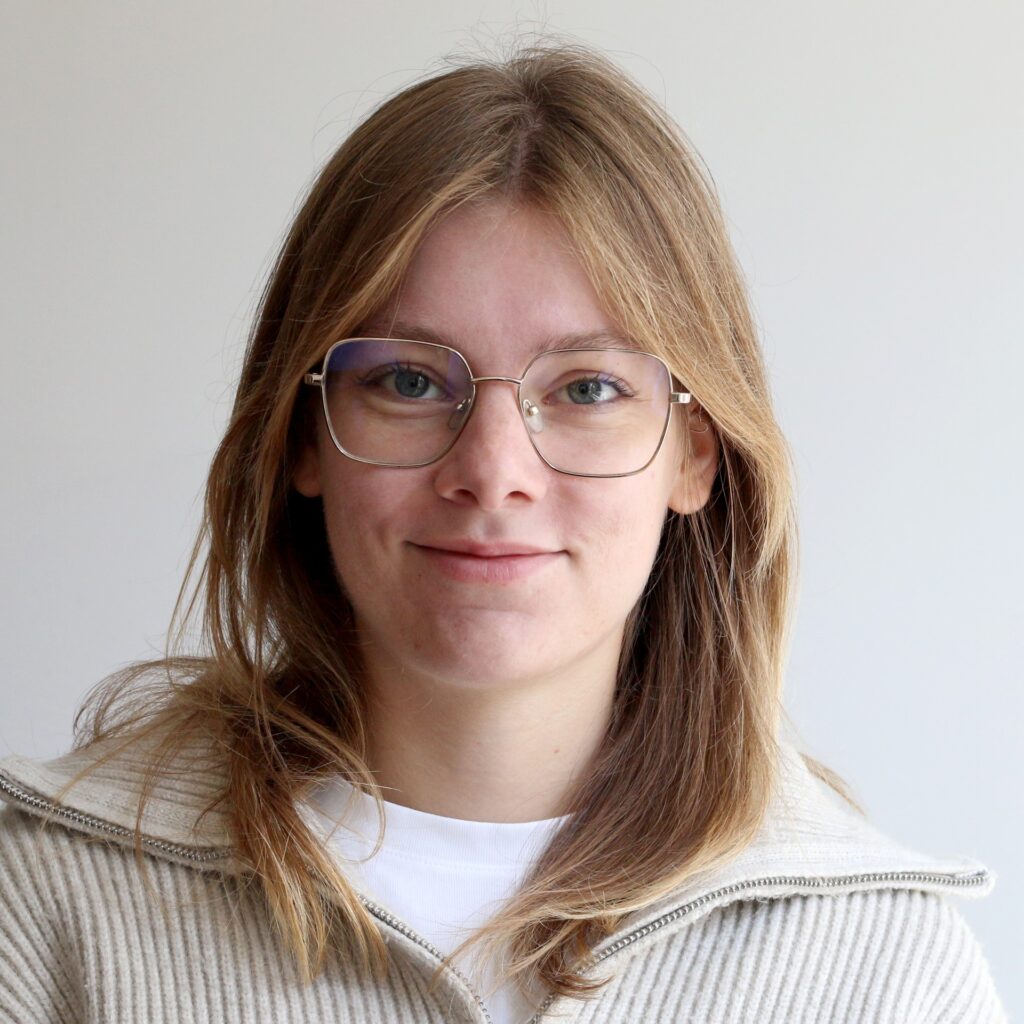
Sarah Verhoeven
University of Gothenburg
Exploring the effects of salinity and nutrient interactions on Ulva metabolism
Ulva species have recently attracted attention in aquaculture as an alternative sustainable protein source due to their high productivity and valuable biochemical composition. These traits can be influenced by environmental factors, including salinity and nutrient availability, which allows their adjustments to different industries or needs. This study investigates the interactive effects of salinity and nutrients on growth and biochemical properties in two Ulva species native to the Skagerrak, U. fenestrata and U. lacinulata. A specific focus was given to herring production process water as an alternative nutrient source to support sustainable aquaculture. Each species was cultivated in 21 treatment combinations, covering three salinities (5, 15, and 30 PSU) and three nutrient sources: synthetic nitrate-based medium (PES), synthetic ammonium-based medium (BC; 25μM, 75μM, and 150μM) and ammonium-based process water (HPPW; 25μM, 75μM, and 150μM). The results revealed species-specific responses: U. fenestrata showed high tolerance to low salinity and robust growth in ammonium concentrations derived from HPPW, while U. lacinulata was more salinity-dependent and sensitive to ammonium (-stress) in hyposaline conditions. Across treatments, the process water significantly enhanced protein and amino acid profiles, approximately doubling concentrations compared to levels under PES (positive control medium), especially at low to moderate salinities. Moreover, evidence for metabolic trade-offs concerning pigment and phenolic content became apparent. Hence, this study underscores the potential of process water as an alternative nutrient source promoting circular aquaculture while optimising Ulva farming.

Johannes Till
Lund University
Harbour Porpoises (Phocoena phocoena) in busy waters: How recreational boats affect numbers, swimming speed, and surfacing interval
The harbour porpoise (Phocoena phocoena) is affected by anthropogenic activities in Swedish waters, and the individuals found in the Öresund belong to the Belt Sea population, which is classified as ´vulnerable´. Boat traffic is known to have a negative impact on porpoises. Behavioural responses to such disturbances are context-dependent, and locally specific knowledge is needed for effective management plans. So far, the potential impact of boats around Kullaberg, an area with a high density of porpoises, remains to be investigated. In this study, the effects of the number of recreational boats on the number of porpoises observed around Kullaberg are analysed using traditional land-based visual observations. In addition, the impact of speed and proximity of recreational boats on the speed and surfacing interval of porpoises in the area is examined using unmanned aerial vehicles (UAVs). During eight sampling days in June 2024, 1438 porpoise cues and 294 boats were counted. Generalised linear models (GLMs) were created to analyse the influence of the number of boats on the number of porpoises observed. No effect was found. In August 2024, two UAVs were flown simultaneously on predefined routes within the same study area. One UAV searched for and followed detected porpoises, while the other UAV monitored the presence of boats. All monitoring data was captured as UAV video and used to determine surfacing intervals, measure the speed of boats and porpoises, and calculate the closest distance between porpoises and boats. A total of 91 synchronous flights were conducted, resulting in 32 porpoise observations. GLMs were used to investigate the effects of boats on porpoise speed and surfacing intervals. The results show that the mean speed of porpoises was influenced by the interaction between the mean boat speed and the distance to the boat. Porpoise surfacing interval decreased with decreasing distance to the boats. No effect of maximum boat speed on the behaviour of the porpoises was found. This study shows that recreational boats can influence the behaviour of porpoises, with potential individual- and population-level effects. In addition, it adds to a growing number of studies exploring the potential of UAVs for data collection on marine mammals.
Many congratulations!!